

The central bank will probably keep interest rates unchanged. The inflation rate for poor people dropped to 9.66% but is still in double digits.
BY Mahnoor | 26-07-2026
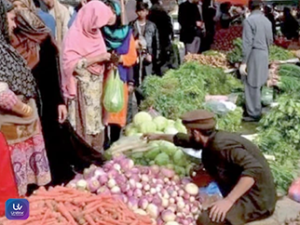
KARACHI: Pakistan’s inflation is becoming less comfortable as the new fiscal year starts. Rising food prices and new worries about global energy markets are making life more expensive. After inflation slowed to 11.1% in June, experts think it will speed up to 9.1% in July. This makes policymakers careful as they decide on the next interest rate.
Market economists from Growth Securities and JS Global predict July’s Consumer Price Index (CPI) inflation will be 9.1% compared to last year. One also expects a 1.1% increase from June. This is much higher than the 4.1% inflation rate in July 2025 and above the government’s average forecast of 8.2% for the new fiscal year.
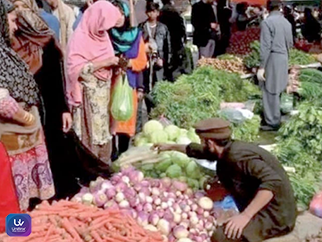
Nasheed Malik from Growth Securities said the expected monthly price rise is mostly because of higher food costs, but lower fuel and LPG prices will partly balance it out. The food index is likely to go up about 1.4% from last month, mainly because tomatoes, potatoes, chicken, and onions got much more expensive due to seasonal reasons.
At the same time, lower oil prices should help a bit. Average petrol prices dropped 17.7% from last month to Rs312.53 per liter, and High-Speed Diesel (HSD) prices fell 14.9% to Rs325.06 per liter, making the transport index go down about 0.8% this month. LPG prices also went down 13.3%, which slightly lowered the overall inflation rate.
According to SBP data that Malik used, month-to-month CPI changes have stayed high in recent months, showing ongoing price pressures even though yearly inflation has slowed down.
However, JS Global’s Muhammad Waqas Ghani pointed out the danger from new Middle East geopolitical tensions, saying high energy costs could increase pressure on Pakistan’s inflation forecast. The brokerage thinks transport inflation will go up by 21% compared to last July, and food inflation is also expected to be 9.1%.
JS Global also warned of a bad situation where long fights in the Middle East make imported energy more expensive and push inflation up to almost 9%, then slowly drop to around 8% when things calm down.
In other parts of the CPI basket, the report says miscellaneous items will have the biggest yearly increase of 11.3%, followed by clothing and food at 9.1%, education at 8.3%, and health at 7.4%. Restaurant prices are expected to go up 5.4%, while furniture costs are estimated to rise 5.9%. Recreation inflation will stay very low at 0.2%, and communication costs are expected to increase only 0.8%. Each month, restaurant prices are expected to go up 0.4%, while clothing, health, education, and recreation are each expected to increase 0.2%.
For now, the July inflation reading shows that while domestic price increases have slowed a lot from last year’s high levels, Pakistan’s inflation still faces risks from food supply shocks and changes in global energy markets.
Expected policy interest rate
Both investment firms think the State Bank of Pakistan will keep the interest rate at 11.5% when it meets on July 27. Growth Securities says the real interest rate, which is positive and expected to be about 2.4% in July, supports keeping things the same, but warns that fresh problems in the Middle East could change how prices and fuel costs go. JS Global also thinks the rate won’t change, and they worry that ongoing conflicts could make imported energy more expensive and keep inflation high.
Price Change Signal
Short-term inflation, measured by the Sensitive Price Indicator (SPI), dropped from double-digit rates to 9.66% compared to the same week last year, ending July 23, 2026. Even though overall trends showed a decrease, inflation stayed above 10% for the poorest people.
This easing happened with price changes due to the Israel-US conflict involving Iran—it paused after peace talks but then started again, keeping fuel costs high.
The SPI is tracked every week by the Pakistan Bureau of Statistics. It looks at 51 basic items in 50 markets across 17 cities. Last week, it went up by 0.91% compared to the week before. The total SPI was 360.88, while it was 357.61 a week earlier and 329.09 in the same week of 2025.
Tomatoes went up the most, by 39.92%. Diesel went up by 15.87% and petrol by 5.23%. Eggs went up by 7.31%, potatoes by 3.70%, and LPG by 0.91%. Smaller increases were seen in cooked daal, tea, mustard oil, garlic, cooked beef, and washing soap.
However, chicken prices dropped by 4.66%, bananas by 1.72%, moong beans by 1.08%, and mash beans by 1.07%. Rice IRRI-6/9, masoor beans, sugar, and chickpeas also saw small decreases.
Out of the 51 items tracked, prices for 22 items (43.14%) went up, eight (15.68%) went down, and 21 (41.18%) stayed the same.
Compared to last year, the 9.66% increase was mainly because of big jumps in tomatoes (up 253.04%), onions (up 81.55%), wheat flour (up 74.13%), LPG (up 46.87%), diesel (up 31.92%), electricity for the poorest homes (up 22.79%), and petrol (up 20.32%). Mutton, chili powder, beef, bananas, and plain bread also went up a lot.
Some things went down, like potatoes (down 32.69%), gram pulses (down 21.48%), sugar (down 17.67%), salt powder (down 14.09%), chicken (down 13.73%), masoor pulses (down 13.55%), eggs (down 9.59%), and moong pulses (down 8.17%).
Looking at different income groups, the weekly SPI increase went from 0.80% for the third group to 0.98% for the richest group, with the overall average at 0.91%. Compared to last year, inflation was highest for the second poorest group at 10.76%, then the poorest group at 10.23%, while the two richest groups saw smaller increases of 9.23% and 9.11%.
Also watch this :